

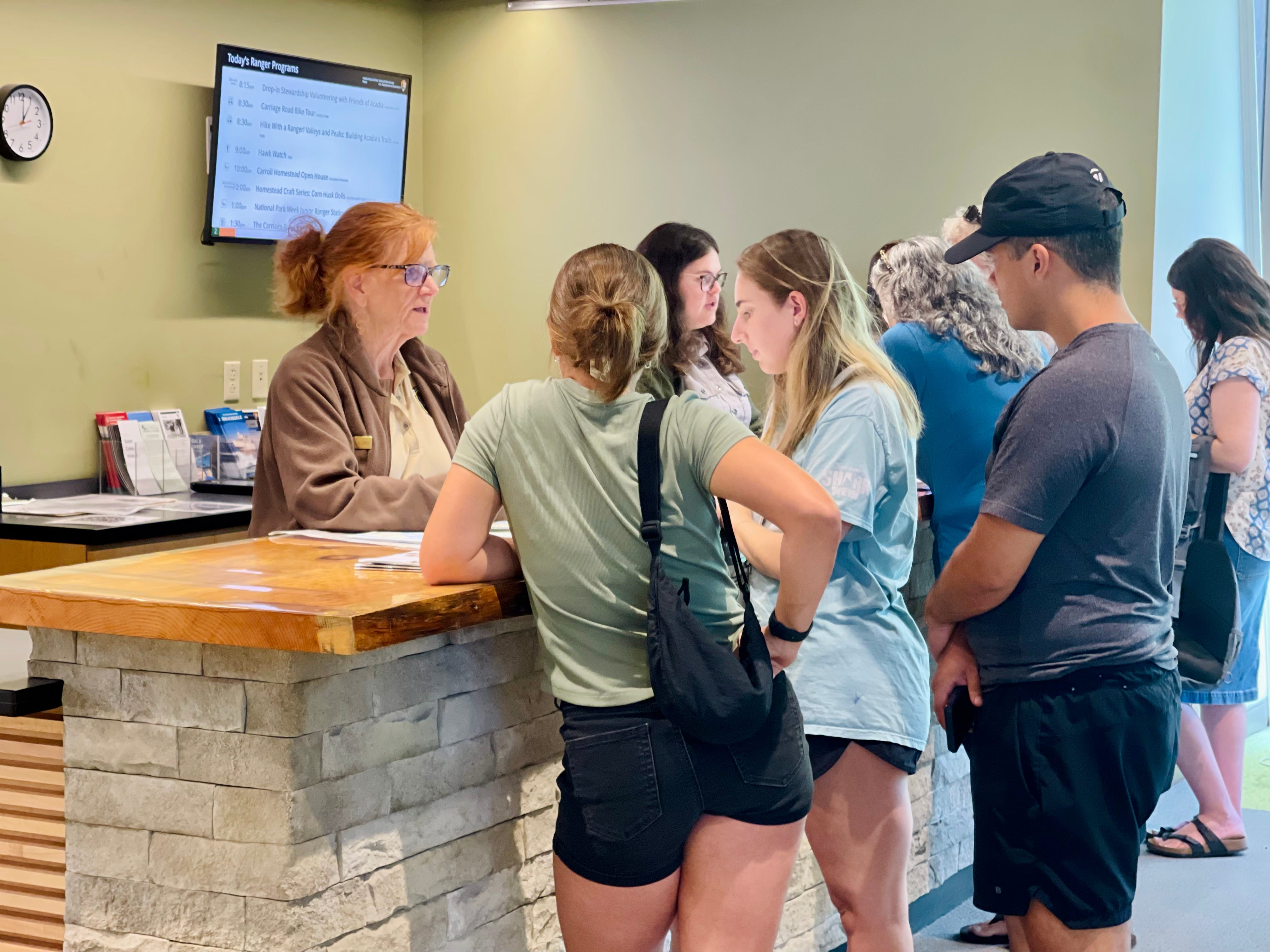
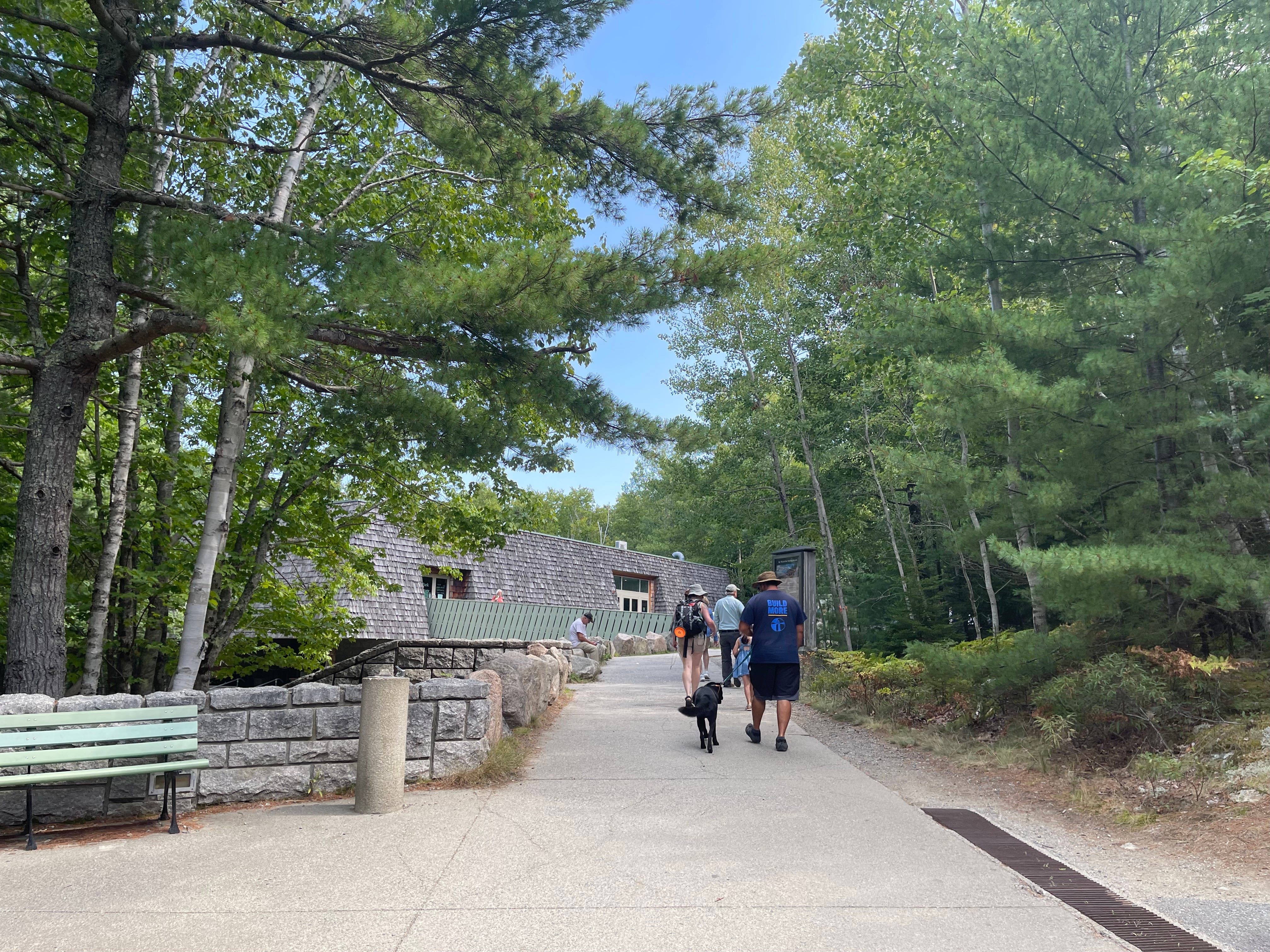
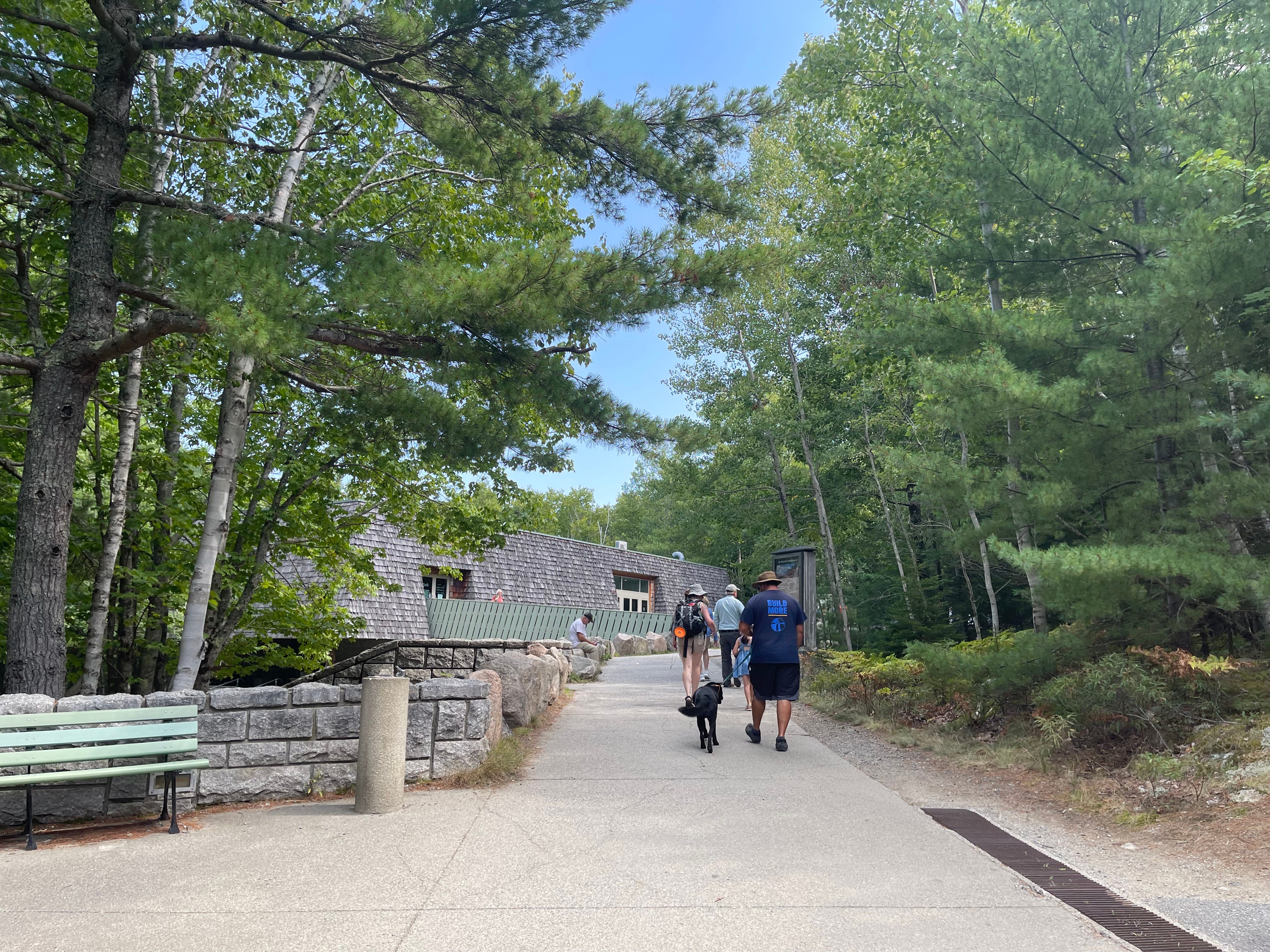
For many people, the Hulls Cove Visitor Center is their first stop in Acadia National Park. Designed in 1967 and updated, its iconic.
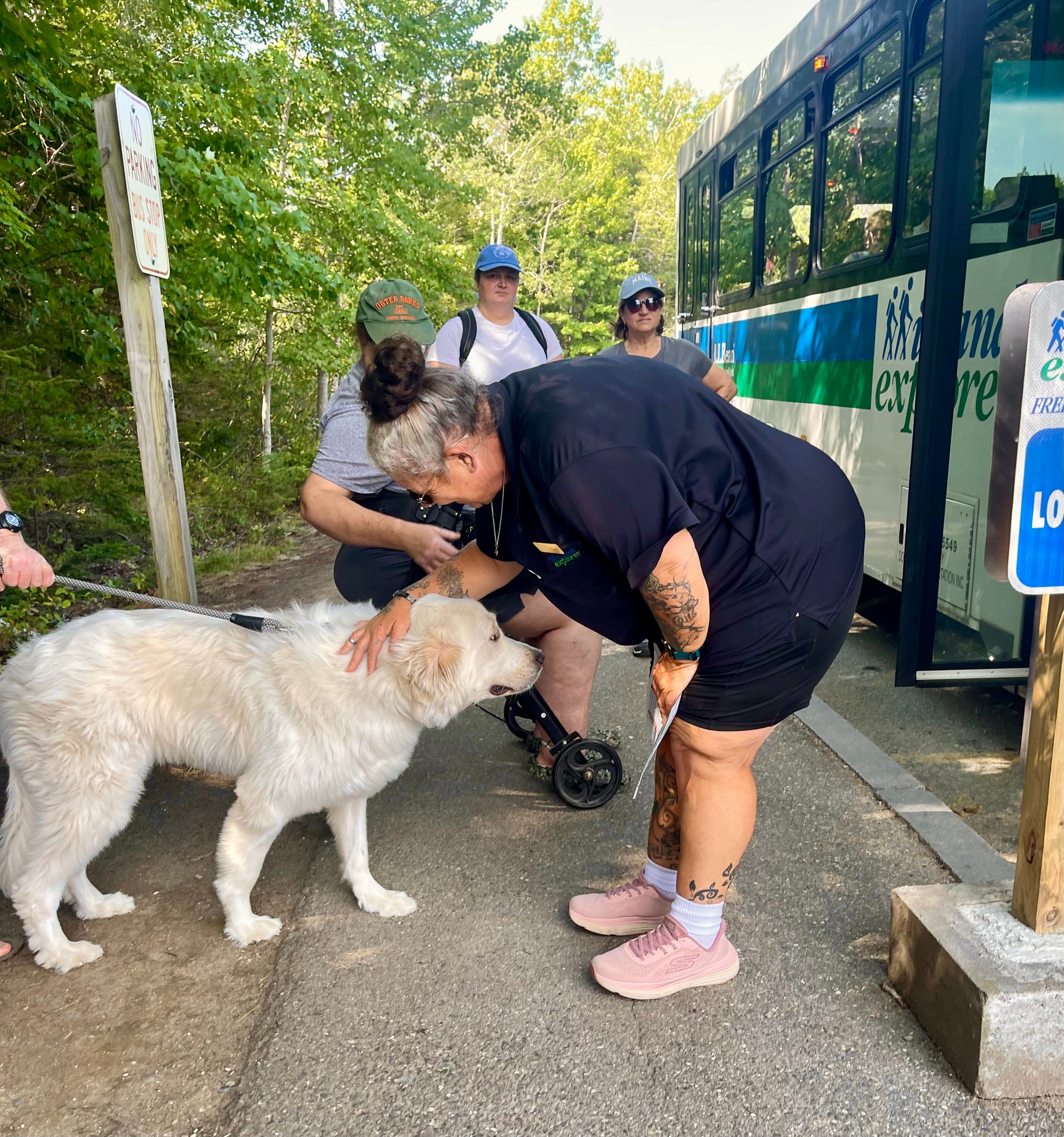
The center’s parking area is often a really crowded place. People park, gather information. Some hop onto the fare-free Island Explorer bus system. Some drive into the 27-mile Park Loop Road. Some drive into Bar Harbor or other towns on Mount Desert Island, where most of Acadia National Park is located.
There are over 50 steps up from the parking lot to the visitor center. However, behind the center is an accessible entrance. Visitors can follow signs to that via driving straight after the turn from Route 3. There are four spaces behind the building.
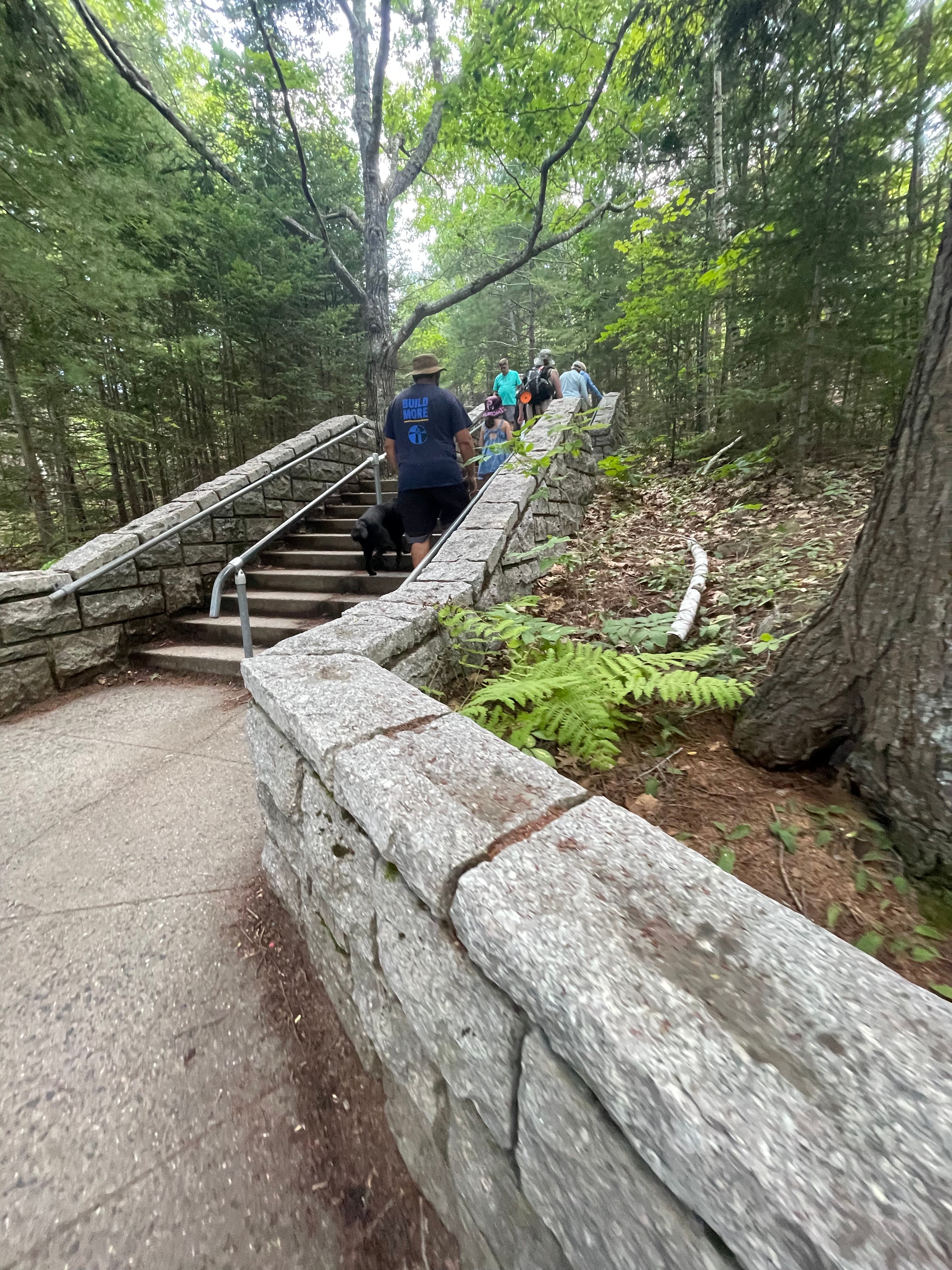
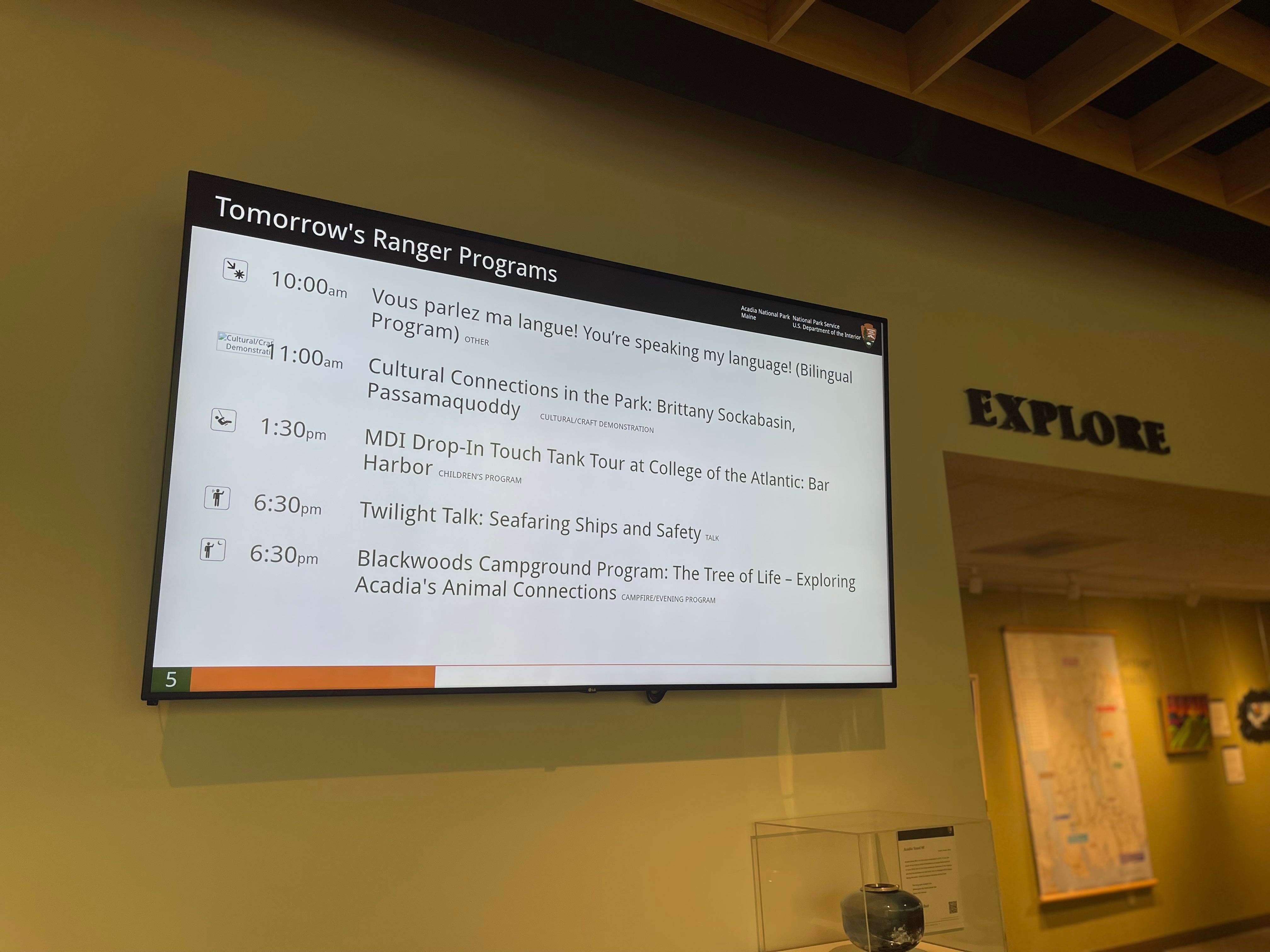
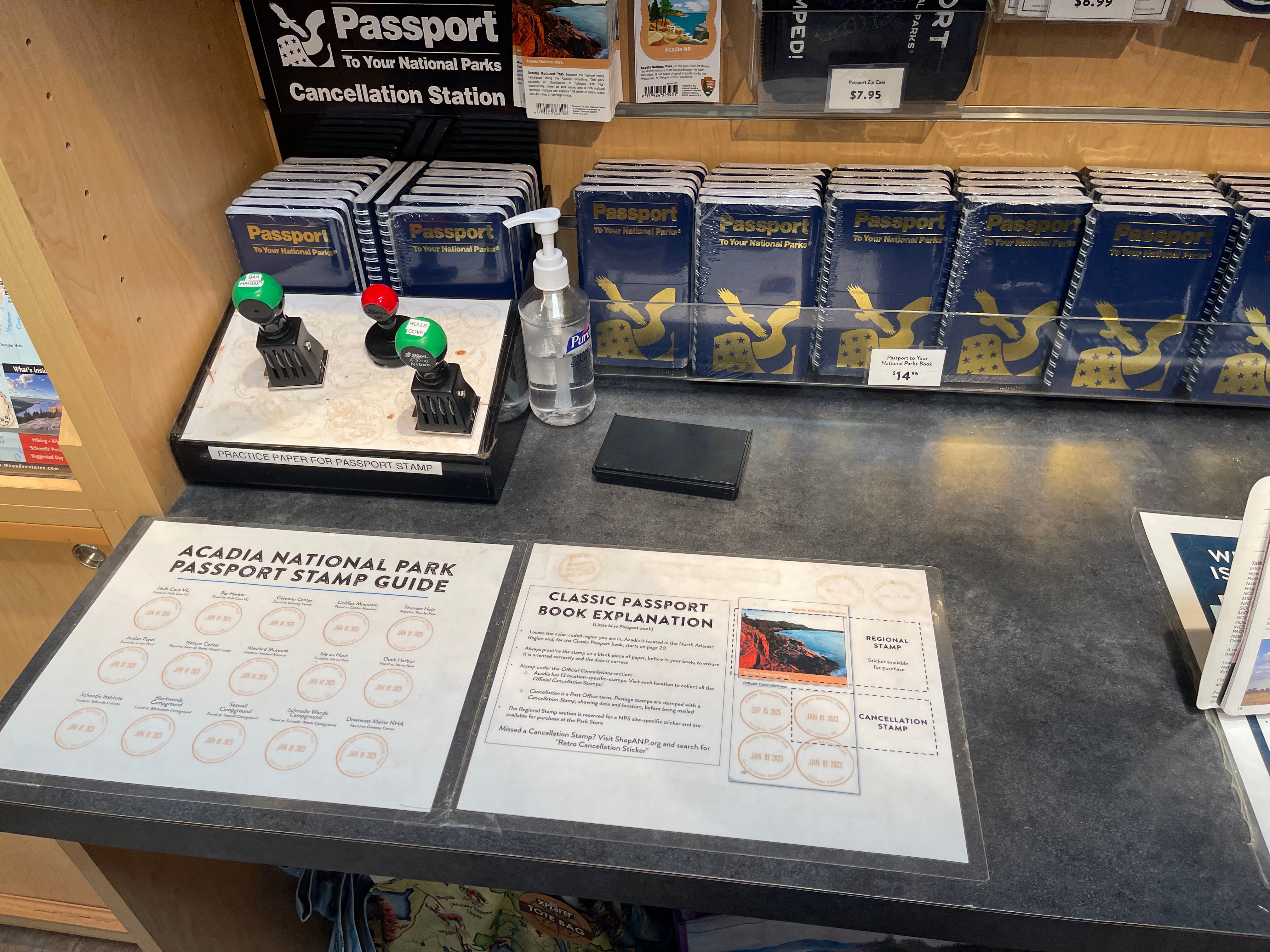
There are panels and maps and information in a pavilion by the sidewalk in the main parking lot. There is an automated machine for park pass purchases. You can enter the carriage roads from here.
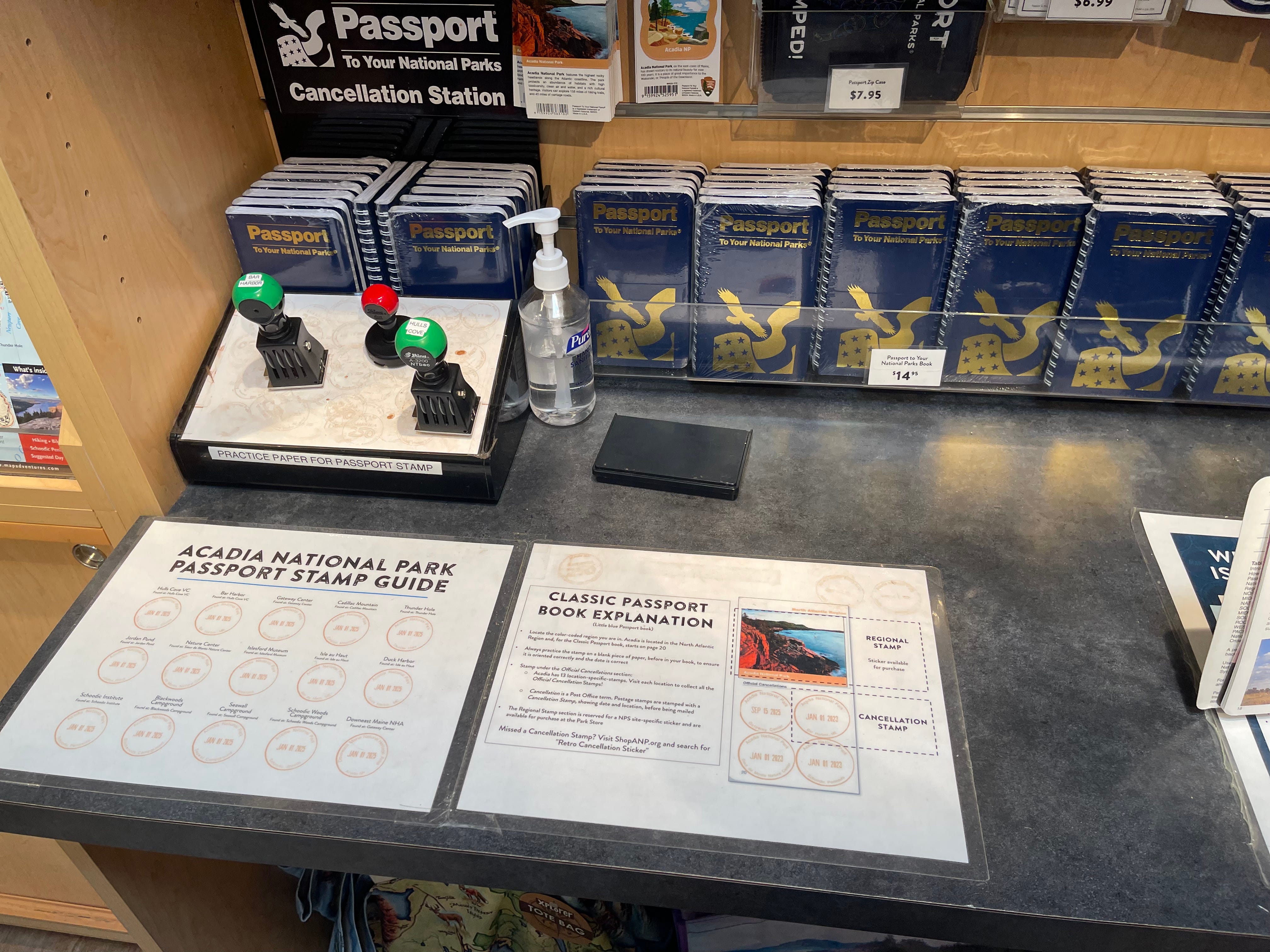
Inside there is even more information and maps, rangers to help you, a place to buy a park pass. There are public restrooms inside as well as water fountains and a park store.
HISTORY
According to the National Park Service, “Hulls Cove Visitor Center was originally both the park’s administrative headquarters and visitor center. It was designed and construction began in 1967. Construction was completed by December of 1968. It was an example of the dual purposes administration/visitor center building type created by the National Park Service (NPS) in the mid-20th century. Funding for the building came from the Mission 66 Program, a nationwide effort to improve infrastructure in America’s national parks from 1956-1966.
”In a departure from the more rustic pre-World War II style of NPS architecture, Mission 66 designers embraced contemporary structural forms for the new centers as well as for ancillary buildings, in part because of the scarcity of buildings materials following WWII and changes in materials and labor. Mission 66 buildings demonstrated a new commitment by the NPS to interpret park resources and accommodate visitors and increased staffing levels. For the first time in NPS history, these buildings grouped park interpretive presentations, auditoriums, administrative offices, restrooms and other visitor services into one complex.”