
Federal Grant Will Help Transform Island Explorer Fleet in Acadia Region

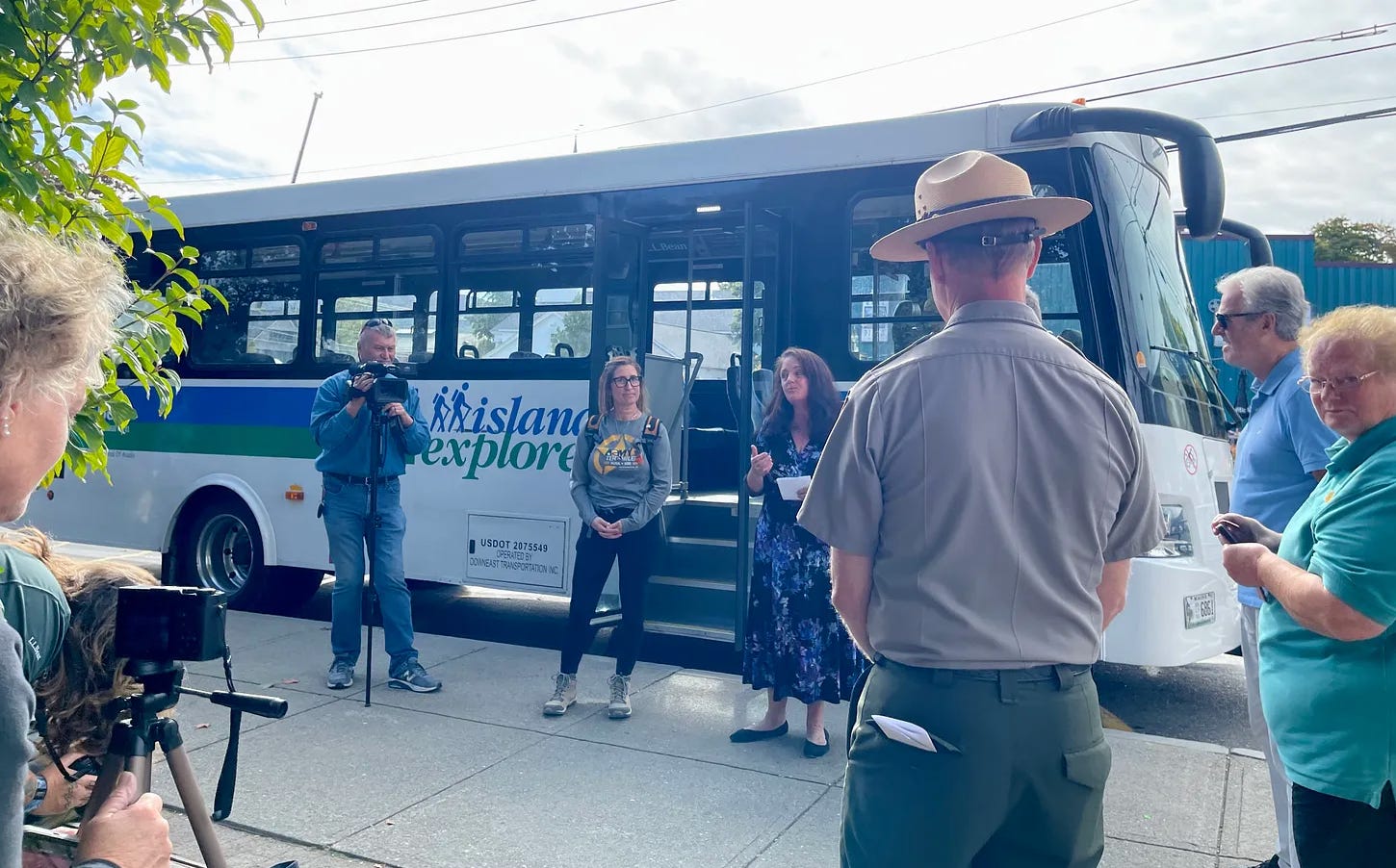
Island Explorer celebrating its 10 millionth passenger in 2024. BHS file photo.
Acadia Adventures is generously sponsored by First National Wealth Management.

ACADIA REGION—Thanks to a $23 million Rebuilding American Infrastructure with Sustainability and Equity (RAISE) grant, the Island Explorer transportation system will start replacing its older buses in the near future. The grant, administered by the Maine Department of Transportation (DOT), will also have matching funds of $5,882,250.
The National Park Service Federal Lands Transportation Program will contribute $5,582,250 and Friends of Acadia will contribute $300,000 of the matching funds.
“The original schedule envisioned funds becoming available in July 2025, with new buses entering service in May 2027. We are currently awaiting approval from the Federal Transit Administration (FTA), which may occur in the coming months. If the original timeline holds, vehicles would likely enter service approximately 22 months after funds become available, potentially in spring or summer 2028. However, until FTA approval is finalized, those dates remain tentative,” said Maine DOT Virtual Public Involvement Coordinator Damian Veilleux.
In September 2023, Acadia National Park and Downeast transportation tested two different all-electric buses on regular Island Explorer routes in the Acadia region. Some of the challenges that were to be monitored during the test periods were the overall length of the routes, especially given the lack of existing charging infrastructure, and elevation changes.
Initially, the bus replacement money was envisioned to fund the purchase of 23 electric buses and supporting charging infrastructure. However, Veilleux said, “As federal priorities, funding requirements, and vehicle costs evolve, the project may also include other non-diesel options such as hybrid or propane buses.”
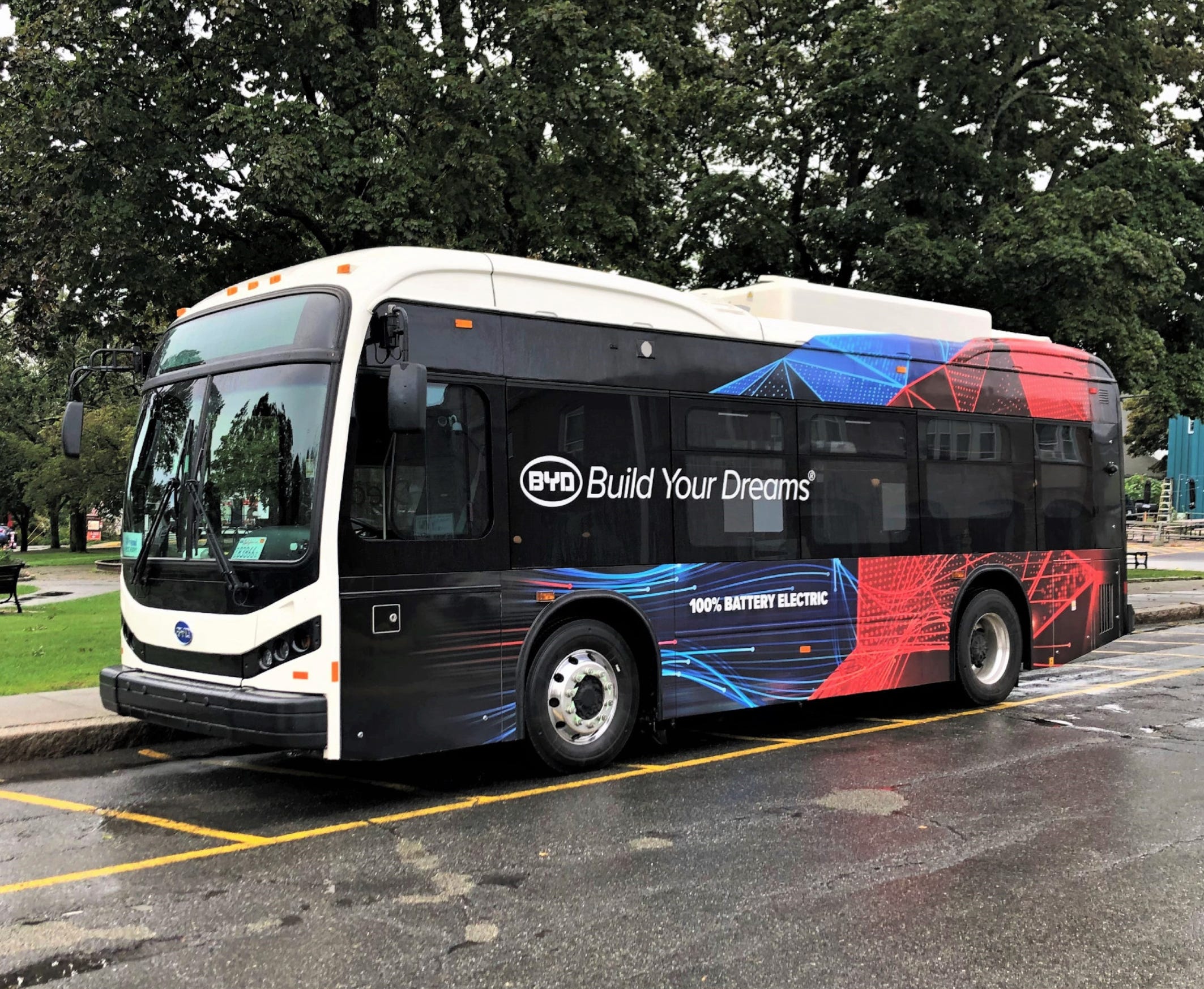
The types of buses purchased and how many are purchased is subject to the terms of the grant agreement and approval by the FTA.
The current Island Explorer fleet “consists of thirty two 28 passenger propane buses, two bi-fuel buses, and two gasoline powered bike vans with trailers,” according to Downeast Transportation Executive Director Paul Murphy.
Veilleux said that the grant purchases were intended to replace approximately half of the current Downeast Transportation fleet with electric buses, but hybrids cost less and do not require as intensive charging infrastructure, so the ultimate type of buses and number of buses is dependent on the final grant agreement.
Primarily, the buses which will be based out of the Acadia Gateway Center, will operate during the Island Explorer service season, according to Veilleux.
Veilleux said, “In addition to reduced tailpipe emissions and quieter operation, the project offers several broader benefits:
“Improved safety through newer vehicles;
“Greater reliability and reduced maintenance costs;
“Expanded mobility and improved connectivity for residents, workers, and visitors;
“Enhanced economic competitiveness by ensuring dependable access throughout the service area;
“Advancement toward a state of good repair for DTI’s fleet;
“Strengthened partnerships among federal, state, local, and private stakeholders;
“Promotion of innovation through adoption of advanced vehicle technologies.”
Since its inception in 1999, and as of 2024, it is estimated that the bus system has eliminated more than 3.6 million private vehicle trips in the park and has prevented the release of over 33,000 tons of greenhouse gases and 51 tons of smog-causing pollutants.
Island Explorer ridership numbers which dropped from a high of just over 648,100 in 2019 have steadily been on the rise again post-COVID with the last four years of ridership shown below. Last year approximately 14% of the ridership were local users, which is approximately 71,000 passenger trips.
2025 - 506,868
2024 - 497,170
2023 - 451,032
2022 - 414,808
Information and schedules are available online at www.exploreacadia.com.